
90% players discovering Pilot Chicken make the same mistakes. Not because they are bad, but because the game gives a false impression of simplicity. A chicken crosses an airport, the multipliers rise, we cash out when we want. Easy, right? Except that most beginners burn through their budget in less than 10 rounds.
I tested Pilot Chicken at three different levels, with bets ranging from €0.10 to €5. The traps are always the same. This guide lists the six recurring mistakes, those I’ve seen in almost all beginner players, and especially how to avoid them. No magic formula here: knowing these traps won’t transform your sessions. But it prevents repeating classic mistakes.
What you need to understand about Pilot Chicken before starting
Pilot Chicken is a crash game developed by Spribe, the same studio behind Aviator. The principle: a pilot-chicken moves square by square on an airport runway. Each square crossed increases the multiplier. A plane can appear at any moment and end the round.
The player chooses their risk level from three options, places their bet between €0.10 and €100, and must cash out their winnings before the plane hits.
| Level | Squares | Multipliers |
|---|---|---|
| Easy | 15 | x1.05 to x25 |
| Medium | 20 | x1.3 to x1,000 |
| Hard | 25 | x1.5 to x1,000,000 |
The maximum win is capped at €10,000 per round, regardless of the theoretical multiplier displayed. Many beginners overlook this detail.
The RTP is between 96% and 97% according to independent sources, which is in the high average of crash games on the market.
The first trap in Pilot Chicken: underestimating the speed of the game
The mechanics of Pilot Chicken are fast. Very fast. A round lasts between 5 and 30 seconds depending on the chosen level and when the plane intervenes. In the early games, many players freeze, hesitate to cash out, and end up watching their chicken get run over.
The problem is a normal reaction to uncertainty. The brain looks for a signal that doesn’t exist, a logic in the sequence of squares. This logic does not exist: each round is independent, generated by a certified RNG (Provably Fair).
What beginners do: wait for the «right moment» to cash out, as if the game sends signals.
What actually happens: there is no signal. The only objective moment is the one you decided before starting the round.
The method that works: set your target multiplier BEFORE clicking on Bet, not during. The auto cash-out is designed exactly for that.
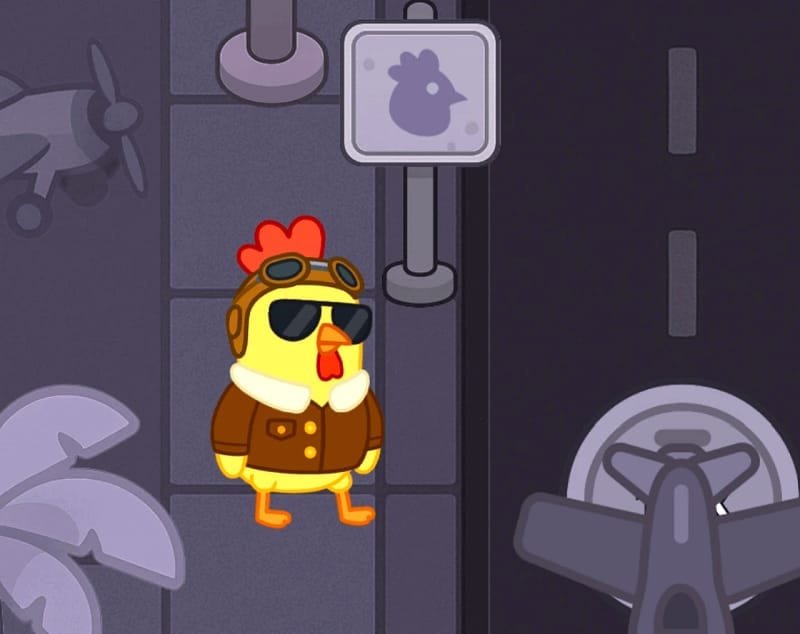
The second trap: starting Pilot Chicken directly at Hard level.
The interface offers three levels. The multipliers in Hard mode (up to x1,000,000 theoretical) immediately attract attention. Result: a good portion of new players start directly in Hard.
Here’s what actually happens in Hard mode:
- 25 boxes on the track.
- Probability that the plane appears well before box 5: very high.
- Interesting multipliers only trigger from boxes 8-10.
- A budget of €20 with bets of €2 = 10 rounds maximum.
In Hard mode, early round endings are much more frequent than in Easy mode. This is intentional: the variance is higher, and so are the potential gains. But for someone learning the mechanics of the game, it’s like learning to swim in deep water without ever having set foot in a pool.
If the topic resonates with you, BetRepublic security license is also worth a look.
For a similar concept, see our CCTV Duck River demo vs real money test..
Easy mode (15 boxes, multipliers from x1.05 to x25) allows players to stay in the game longer, understand how the multiplier curve works, and cash out small regular gains. The tension is real, rounds end, but at a pace that allows time to learn.
The third trap: skipping the Pilot Chicken demo.
Pilot Chicken offers a demo mode with fake credits. Many players skip it, believing that «playing for fake» won't teach them anything concrete.
The demo, however, serves three specific purposes:
- Calibrate your tempo : understand at what multiplier you feel comfortable cashing out, without the pressure of real money
- Test the auto cash-out : learn to set a target multiplier and observe how the mechanism works in practice
- Observe the frequency of early round endings at a given level, without consequences on your budget
The Pilot Chicken demo is identical to the real mode on all technical points: same RNG, same animations, same interface. It’s exactly the same game with virtual credits.
Spend 15 to 20 rounds in demo mode at the chosen level before switching to real money, it really changes the way to approach the first real games.
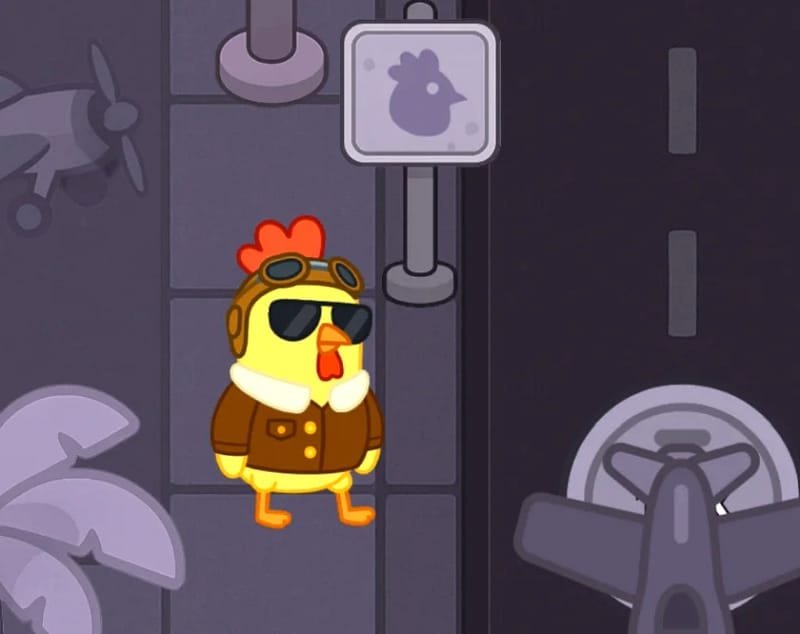
The fourth trap: betting without session limits on Pilot Chicken
Another common behavior among beginners: entering a session without having defined in advance how much they are willing to play. You start with €20, lose a few rounds, say to yourself «just one more,» and keep playing until you want to compensate.
This pattern applies to all games of chance. But the speed of the rounds on Pilot Chicken (sometimes 5 to 8 seconds each) accelerates the pace of this cycle.
Some concrete benchmarks based on the starting budget:
| Session budget | Recommended bet | Indicative number of rounds | Suitable level |
|---|---|---|---|
| 10€ | 0,50€ | 20 | Easy |
| 20€ | 1€ | 20 | Easy or Medium |
| 50€ | 2-3€ | 17 to 25 | Medium |
| 100€+ | €5 max | 20+ | Medium or Difficult |
Setting your bet and the number of rounds before starting is also what allows you to enjoy the game without wanting to «recover» from an unfortunate round.
The fifth trap: confusing theoretical multiplier and achievable win
Pilot Chicken displays a maximum multiplier of x1,000,000 in Hard mode. This figure is real, technically. But the maximum win per round is capped at €10,000, regardless of the bet and the multiplier reached.
To reach this cap of €10,000 with a bet of €1, you would need a multiplier of x10,000. To achieve it with €0.10, you would need x100,000. These levels correspond to the last boxes in Hard mode, which very few rounds reach.
Regular wins on Pilot Chicken are in much more modest ranges, depending on the chosen level and target multiplier. The game is a high volatility crash game in Hard mode, and the numbers reflect this reality.
Players who understand this mechanic play differently. They set realistic session goals (doubling their bet in several small cash-outs, for example) rather than aiming for the jackpot in every round.
The sixth trap of Pilot Chicken: ignoring auto cash-out in the first sessions
The auto cash-out of Pilot Chicken allows you to set in advance the multiplier at which the game will automatically cash out your winnings. Once configured, you no longer have to intervene: if the chicken reaches this multiplier, the cash-out triggers by itself.
For beginners, it’s a valuable tool, often overlooked. Why it changes the experience:
- It eliminates real-time hesitation: the decision is made before the round, not under pressure
- It avoids the classic mistake of letting it run too long because you «felt it was going to continue»
- It allows managing several consecutive rounds without decision fatigue
The recommended setup to start: target multiplier between x1.5 and x2.5 in Easy mode, between x2 and x3 in Medium mode. These values offer a good ratio between cash-out frequency and win size.
The auto cash-out does not change the game's probabilities. It changes the way you make your decisions, which, for many players, changes the outcomes of their sessions.
What players say after their first attempts
Thomas G., Paris (4.5/5): «I started directly in Hard mode and burned through my €15 starting amount in 8 rounds. I switched back to Easy mode with the auto cash-out at x2 and I understood how the game really works. It’s a mini-game that deserves to be played in demo first.»
Sophie M., Rennes (4.5/5): «What I like is that each game is short. You can easily stop. What I learned: set your bet in advance and don’t exceed it. The chicken is funny but the game is serious.»
Marc D., Grenoble (4/5) : «The medium mode is the best compromise for me. Not too fast, interesting multipliers starting from the 6th box. I play with the auto cash-out at x2.5 and it suits me well. The demo really helped me understand the timing.»
Advantages and limitations of Pilot Chicken for beginners
What works in favor of the game:
- Minimum bet of €0.10, accessible with any budget
- Demo mode available without registration
- Three clearly differentiated risk levels
- Auto cash-out easy to set up
- RTP between 96% and 97% (independent source: BigWinBoard)
- Provably Fair: each round is verifiable via a SHA-256 hash
What to keep in mind:
- The speed of the rounds can encourage intensive play if no limit is set
- The Hard mode is reserved for players who have already understood the lower modes
- The x1,000,000 multiplier is theoretical: the actual ceiling is €10,000 per round
- The results of each round are independent, no «streak» or «exploitable logic»
Responsible gaming
Pilot Chicken is a game of chance. The results are generated randomly and each round is independent. No strategy can alter the game's probabilities.
Setting a strict gaming budget before starting each session is the basis of responsible practice. In France, the support service for people struggling with gambling is available at 0 974 750 040 (Players Info Service, non-premium rate call). Self-exclusion tools are available directly from licensed online casinos.
Gambling is strictly reserved for adults (18 years and older).
FAQ Pilot Chicken
▸
How does auto cash-out work on Pilot Chicken?
▸
Can you play Pilot Chicken in demo mode without creating an account?
▸
What risk level should you choose to start on Pilot Chicken?
▸
What is the RTP of Pilot Chicken?
▸
How does Pilot Chicken apply Provably Fair?
▸
What bet applies to the maximum win of €10,000 on Pilot Chicken?
▸
Can you play Pilot Chicken on mobile without downloading an app?
Final note
Pilot Chicken: 4.6/5
Pilot Chicken is a well-constructed crash game, with a good level of customization for beginners. Three risk modes, a functional auto cash-out, and a complete demo: the game provides the tools to start correctly. The speed of the rounds and the appeal of high multipliers in Hard mode can lead to hasty decisions if one does not take the time to understand the mechanics beforehand. Start with Easy mode, use the demo, set your limits. The rest will come with practice.
Tags: Pilot Chicken, Spribe, crash game, mini-casino game